

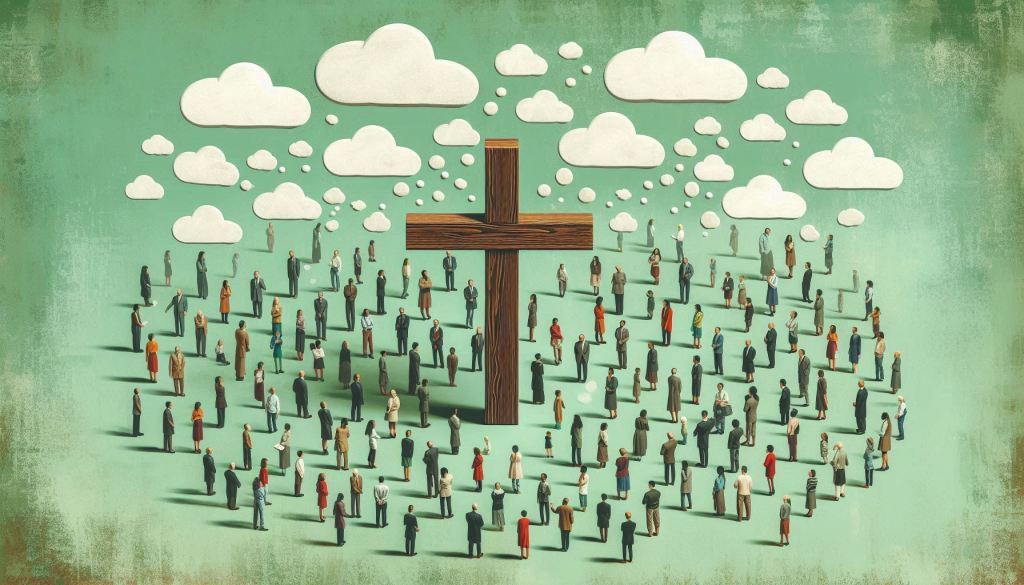
Some of the most significant damage we inflict on our life together is caused by our efforts to create Christian community. If you asked 100 churchgoers to define “Christian community,” you would end up with 100 variations—many idealistic and unfeasible. Now, consider that many of those churchgoers expect their church to meet their expectations, and when their church falls short of their standards, they will set out to “build community.” This pursuit often leads to frustration, as differing views clash and grand visions overshadow the true essence of fellowship.
You do not need to attend a local church long before hearing concerns about the lack of community. If we are honest, we have likely voiced similar laments ourselves. This desire for a healthy life together is all well and good as long as we build on the correct foundation.
No one has articulated the problem with these damaging ideals better than Dietrich Bonhoeffer in his book Life Together. He says, “Innumerable times, a whole Christian community has broken down because it sprang from a wish dream. The serious Christian, set down for the first time in a Christian community, is likely to bring with him a very definite idea of what Christian life together should be and try to realize it.”
Bonhoeffer continues, “But God’s grace speedily shatters such dreams. Just as surely as God desires to lead us to a knowledge of genuine Christian fellowship, so surely must we be overwhelmed by great disillusionment with others, with Christians in general, and if we are fortunate, with ourselves.”
Many times, our disappointment with the community in our church stems from the fact that our definition of Christian community is unrealistic. It is based on an over-realized view of sanctification and unconsciously neglects what binds us together. This misstep causes us to resent the fellowship, and feeling animosity toward a gift given to us by God is always evidence that we have missed the mark.
If we harbor resentment toward our church because it does not measure up to our ideals, we should recognize the discouragement we feel as God waking us up to our unbiblical views. How we respond to this discouragement is what matters most. There are two ways we could react.
To borrow more thoughts from Bonhoeffer, one response is to take our visionary dreaming and stand over the community in a proud and pretentious way. We set up our own law and stand as a living reproach to those in our circle who do not measure up. To see ourselves as the creator of Christian community while at the same time functioning as the accuser of the brethren. If we are in this state, the best thing that can happen to us is to fail miserably and begin to despair of ourselves.
A second response to our discouragement about the Christian community will support the community instead of hindering it. When we find ourselves disillusioned by the “lack of community,” we shouldn’t say, “What is wrong with these people or the leaders of this church.” We should think, “This is exactly what I should expect a group of redeemed sinners gathering together to look like. This imperfect gathering of forgiven people is where I need to enter in with my brothers and sisters because I am a sinner as well and do not measure up either.”
Bonhoeffer says, “Only that fellowship which faces such disillusionment, with all its unhappy and ugly aspects, begins to be what it should be in God’s sight, begins to grasp in faith the promise given to it.”
Your brother or sister who frustrates you because they do not live up to your standard of community is still your brother or sister in Christ. That is the basis of a Christian community—not some euphoric feeling of connectedness or precise agreement on exactly how a Christian community should disciple each other and fellowship.
We must always start with the truth that our church and fellow believers are already a community in Christ. We did not build it. Jesus created it by saving our souls and bringing us together. Neither of us deserves this grace, and he put us together because we need each other. Imagine how dreadful it would be to live a Christian life without any contact with other believers. God, being rich in mercy, has given us as a gift to each other—we need each other because of our weaknesses, not despite them.
This fact that God creates Christian community, not us, does not mean we cannot address areas where our fellowship might be stifled or discuss ways in which we could grow closer. This article does exactly that. Nor does it mean that all discouragement with our Christian community is illegitimate. Some local fellowships are domineering or licentious, and there are proper times to part ways.
Nevertheless, this article is focused on the attitude of our hearts when we have a faithful church and still find ourselves disillusioned because they do not meet our vague but often demanding notions of community. As Bonhoeffer pointed out, “Because God has already laid the only foundation of our fellowship, because God has bound us together in one body with other Christians in Jesus Christ, long before we entered into common life with them, we enter into that common life not as demanders but as thankful recipients.”
Until we build on this foundation of being thankful recipients, we will be building castles of sand that we will call a Christian community. However, these castles will crumble at the slightest stress, and the collapse will be the best thing to happen if we once again anchor our community on the truth that we need each other and that God bringing us together is a gift of grace we do not deserve.
-D. Eaton
 The Fight of Faith